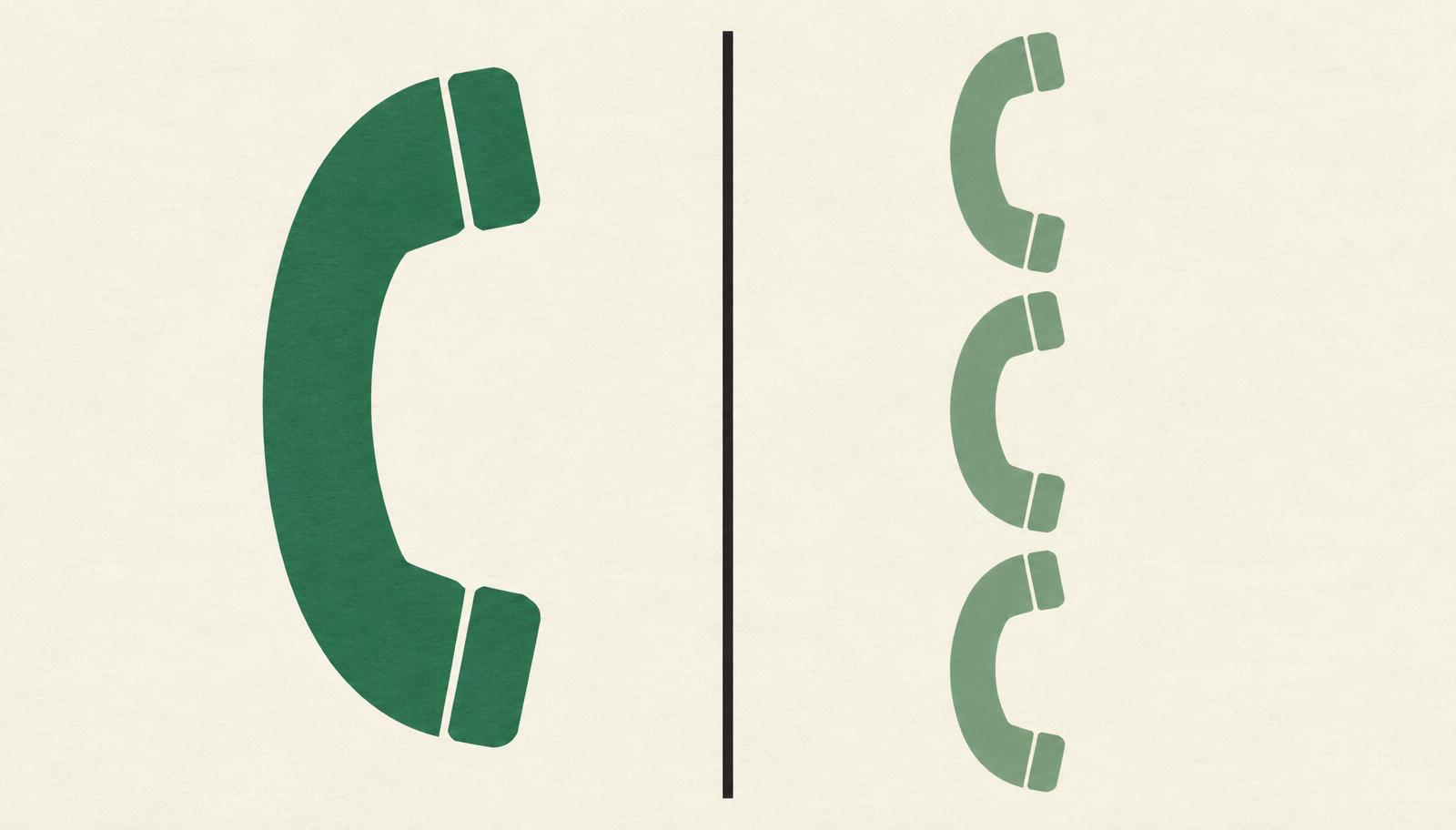
Both tools eliminate manual dialing. They eliminate different things afterward, and this detail dictates the right choice.
What each one eliminates
| Downtime | Power dialer | Parallel dialer |
|---|---|---|
| Number entry | Eliminated | Eliminated |
| Unanswered ringing | Involuntary | Eliminated |
| Listening to voicemail | Endured or bypassed | Eliminated |
| Wait between calls | Short | Zero |
When a power dialer is still the right choice
- Short, high-value lists: you want to hear the ringing and the context of the answer.
- Existing client follow-ups: the tone of the call matters more than volume.
- Junior salesperson: one conversation at a time, no surprises, to stabilize the pitch.
When a parallel dialer is essential
- Cold list of several hundred contacts.
- Answer rate below 10%.
- Goal expressed as number of conversations per day.
The false debate
In modern tools, these are two settings on the same screen. You switch from one line to four based on the morning's list. Choosing a vendor that bills parallel dialing as a separate module is like paying twice for the same feature.
Our recommendation
Start sequentially for two days to stabilize the pitch and outcomes. Then switch to three lines for cold lists, keeping sequential for follow-ups. Measure conversations over two minutes: it's the only metric that truly moves.
Frequently asked questions
Frequently asked questions
Does a parallel dialer fatigue salespeople more?
Yes, conversation density is higher. 45-minute sessions followed by a break yield better results than a continuous half-day.